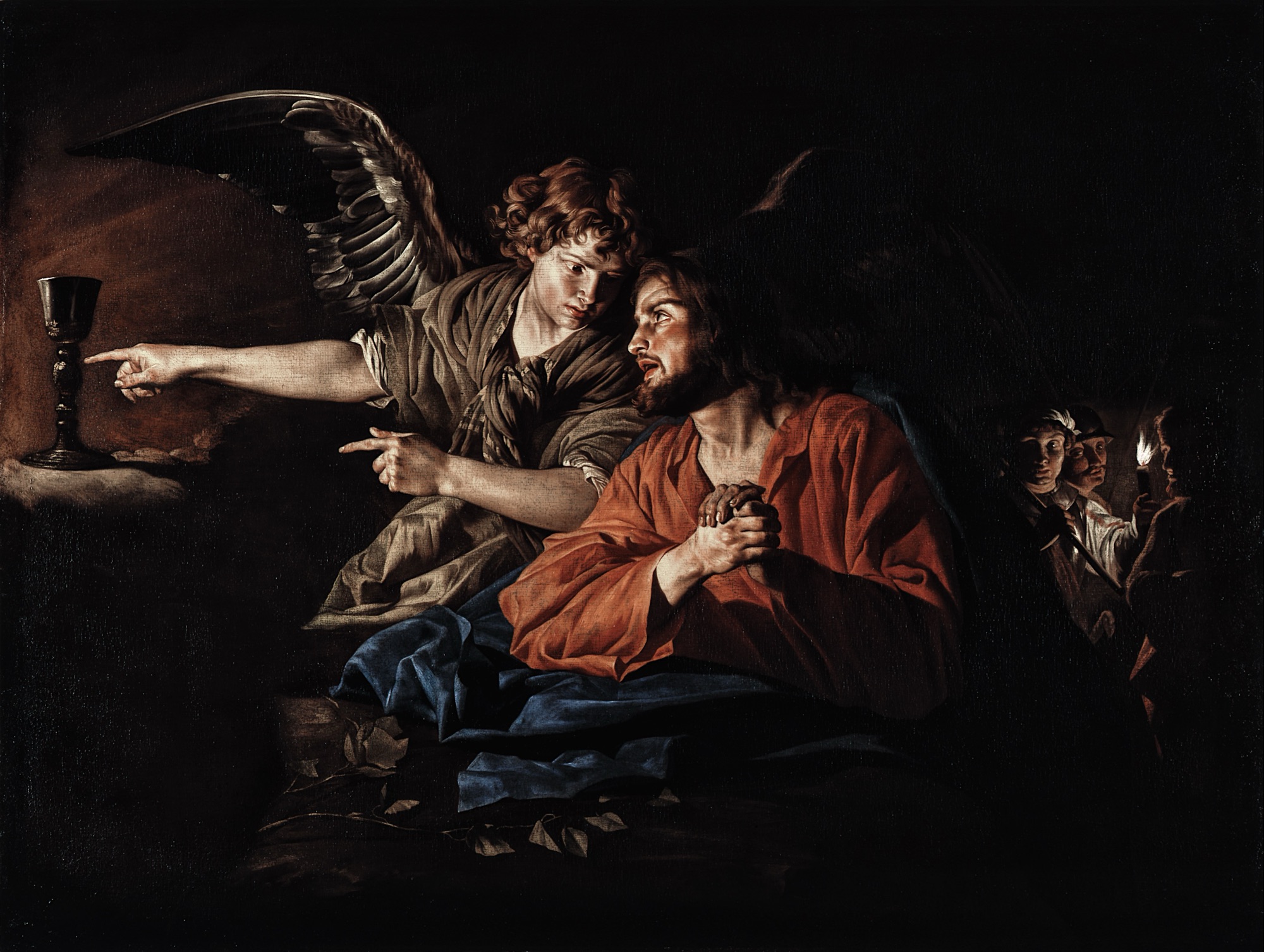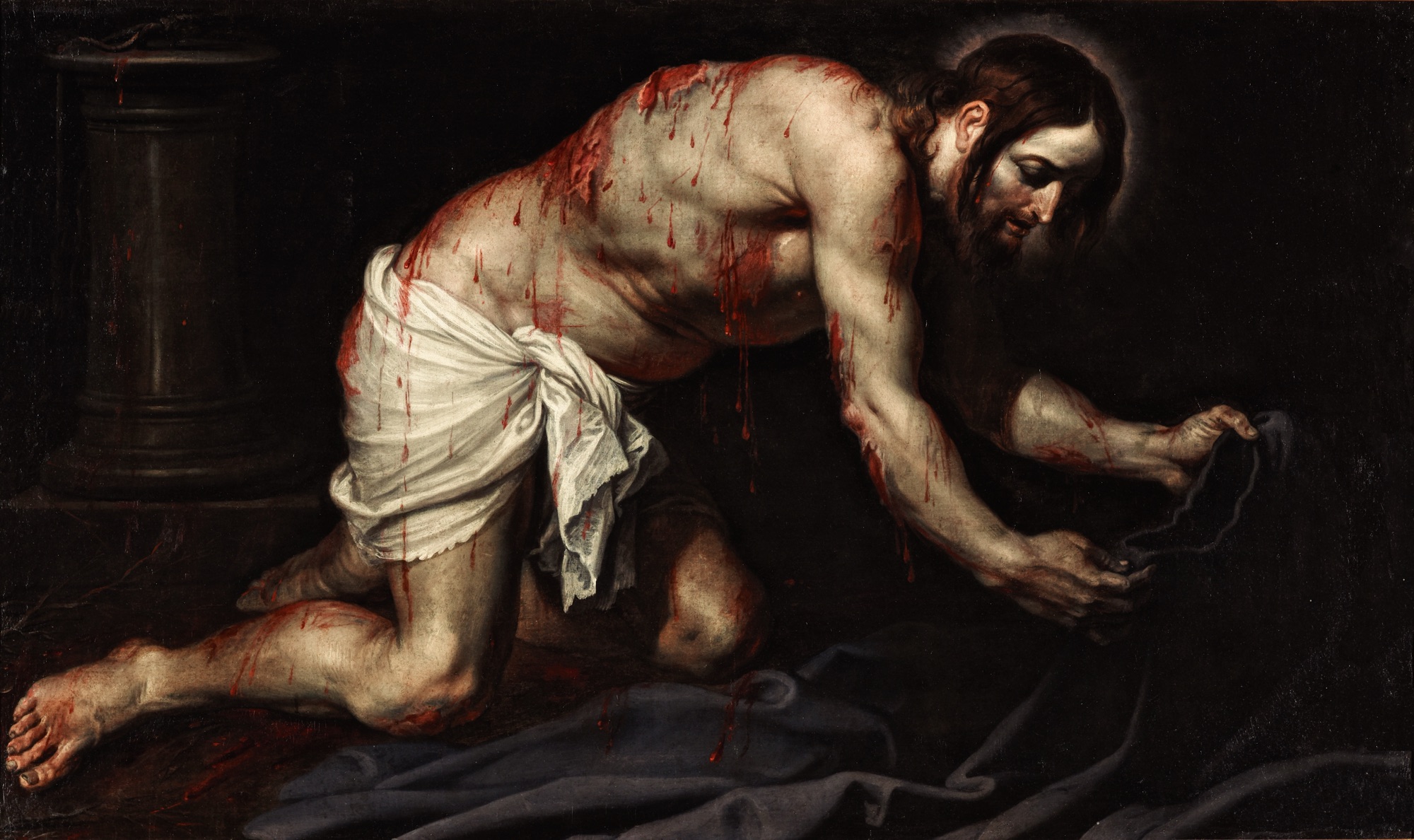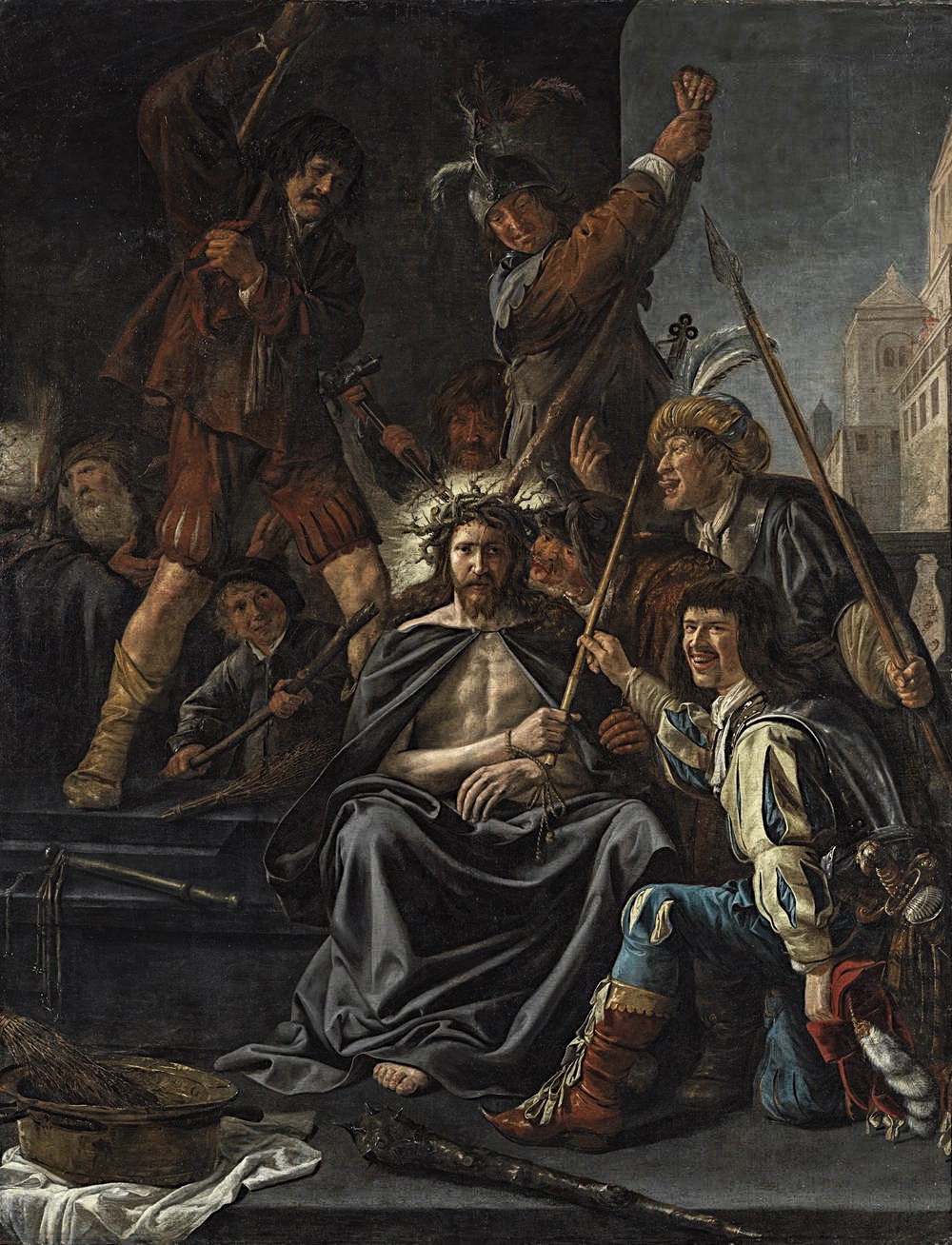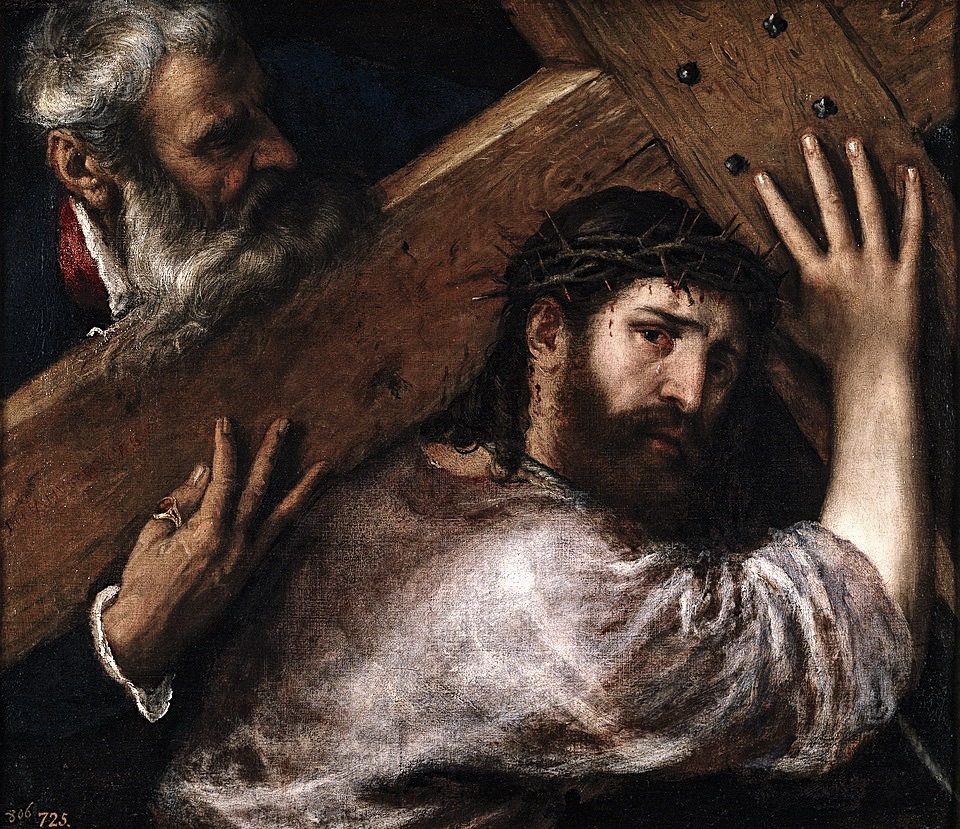
Pray the sorrowful mysteries of the rosary with baroque art.
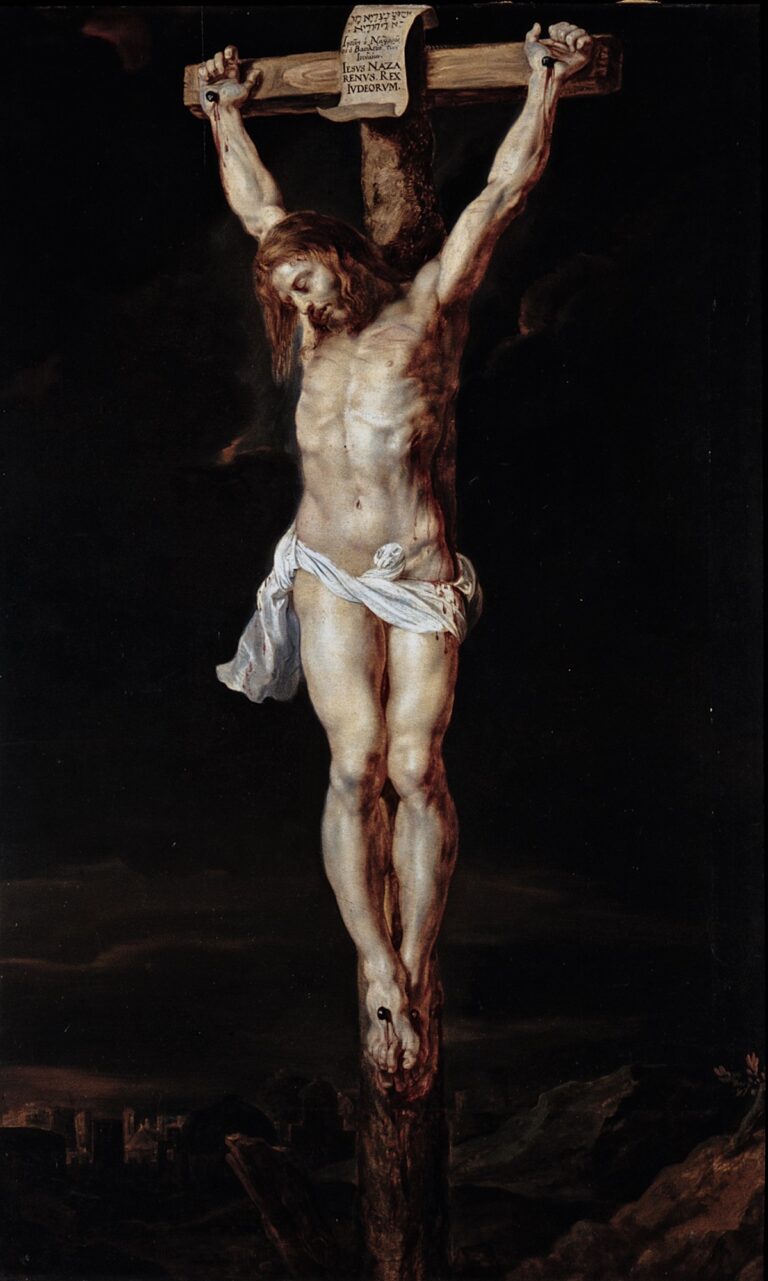
I: Gaze upon the lifeless body of Christ, glowing with radiance against a dark starry night. In this painting, Rubens portrays an all-too-familiar sight, in raw, simple detail.
II: In this painting, there can be no mistake. As we gaze upon this straightforward depiction of our Lord’s bloodstained corpse, the reality is clear. That indeed, God became one of us, suffered as one of us, and died as one of us.
III: My kingdom is not of this world. If my kingdom were of this world, my servants would have been fighting, that I might not be delivered over to the Jews. But my kingdom is not from the world.
IV: Draw your eyes to pilate’s sign, written in Latin, Hebrew, and Greek. Jesus of Nazareth, King of the Jews.
Where then, is his crown?
V: With not even a crown of thorns, or Mary Magdalene weeping at the foot of the cross, Rubens portrays a seemingly ordinary man.
But this is no ordinary man.
VI: By omitting the symbolic crown of thorns, Rubens makes his point even clearer.
That even in this humiliated state, whipped and stripped of everything, Christ is in fact not only the King of the Jews, but King of the Universe.
VII: For the foolishness of God is wiser than men, and the weakness of God is stronger than men.
VIII: Unlike in most portrayals of the crucifixion, here, our Lord does not hang with outstretched arms.
Instead, he hangs, dangling, helplessly from His cross.
IX: We preach Christ crucified, a stumbling block to Jews and folly to Gentiles. What the world sees as pathetic, we see as ultimate victory. O death, where is your victory? O death, where is your sting?
X: Against a backdrop of a world in darkness, what it sees as foolishness, is in fact the light, and salvation of the world.